
A practical guide to product selection, supplier comparison, landed cost, quality control, consolidation, shipping, customs, and first-time importing
Introduction
Latin America is not a single customs market. Import procedures, taxes, labeling rules, product standards, importer registrations, and documentation can differ substantially between Mexico, Brazil, Colombia, Chile, Peru, Argentina, and other markets. For a buyer sourcing from China, the safest approach is to build the purchasing plan around the destination country from the beginning rather than choosing the product first and checking compliance later.
China–Latin America trade is already substantial. ODI Global reported that trade between China and Latin America and the Caribbean reached about US$510 billion in 2024, illustrating the depth of the commercial relationship. The Inter-American Development Bank also reported continued trade growth into 2026. These trends create opportunities for importers, but they do not eliminate the need for product-level and country-level due diligence.
1. A Step-by-Step Wholesale Purchasing Process for Latin America
A first commercial order should be treated as a supply-chain project rather than a simple purchase. The objective is to establish a repeatable process that protects product quality, cash flow, delivery schedules, and resale margins.
| Stage | Main Action | Key Output |
|---|---|---|
| 1. Market definition | Choose destination country, target customer, product category, price band, and expected sales volume. | Clear purchasing brief |
| 2. Product selection | Shortlist products that can be legally imported and commercially resold. | Product shortlist |
| 3. Supplier sourcing | Compare factories, wholesalers, marketplaces, and sourcing agents. | Supplier comparison |
| 4. Quotation | Request comparable quotations using the same specifications and Incoterm. | Comparable supplier quotes |
| 5. Sample approval | Order and test samples before bulk production. | Approved reference sample |
| 6. Compliance check | Confirm HS classification, labeling, permits, standards, and importer requirements. | Import-compliance checklist |
| 7. Bulk order | Confirm contract, payment terms, production schedule, packaging, and inspection standard. | Purchase order |
| 8. Inspection | Inspect finished goods before shipment when appropriate. | Inspection report |
| 9. Consolidation and shipping | Consolidate cargo if useful and select sea, air, express, or multimodal transport. | Shipping plan |
| 10. Customs clearance | Prepare declarations and supporting documents with the importer/broker. | Customs-cleared cargo |
| 11. Post-arrival review | Calculate actual landed cost and evaluate supplier performance. | Revised sourcing model |
A useful principle is to freeze the product specification before comparing suppliers. Otherwise, a low quotation may simply reflect a lower fabric grade, smaller dimensions, fewer accessories, weaker packaging, or different production standards.
2. How to Select Chinese Products Suitable for Resale
A product can be inexpensive in China and still be unprofitable in Latin America. Resale suitability depends on demand, competition, shipping efficiency, compliance, damage risk, seasonality, and the final selling price.
| Selection Factor | Questions for the Buyer | Why It Matters |
|---|---|---|
| Demand | Is there repeat demand in the target market? | Reduces the risk of holding slow-moving inventory. |
| Gross margin | Can the expected retail/wholesale price cover the full landed cost? | Protects profitability. |
| Shipping efficiency | Is the product compact relative to its value? | Freight can materially affect low-value or bulky goods. |
| Durability | Can the product tolerate handling and long-distance transport? | Reduces damage and return risk. |
| Compliance | Does the product require testing, permits, registration, or special labeling? | Avoids customs and market-entry problems. |
| Customization | Can packaging, labels, colors, sizes, or specifications be adapted? | Creates differentiation for resale. |
| Reorderability | Can the supplier reproduce the same specification consistently? | Supports repeat purchasing. |
| Seasonality | Is demand highly seasonal or trend-sensitive? | Affects production and inventory timing. |
For first-time importers, relatively straightforward consumer products with predictable demand and manageable compliance requirements are often easier to test than highly regulated products, food, medicines, or goods requiring complex certifications.
3. Sourcing Channels and How to Compare Suppliers
Latin American buyers can use Chinese e-commerce marketplaces for product research, wholesale markets for physical comparison, B2B platforms for supplier discovery, direct factory sourcing for larger orders, or a professional sourcing agent for local support.
| Sourcing Channel | Best Use | Strength | Main Limitation |
|---|---|---|---|
| Chinese consumer marketplaces | Product discovery and retail price research | Large assortment and real consumer pricing | Retail listings are not automatically factory-direct |
| B2B marketplaces | Initial supplier discovery | Large supplier pool and quotation requests | Supplier information still needs verification |
| Physical wholesale markets | Fashion, accessories, ready stock, multi-supplier comparison | See products and compare suppliers in person | Requires travel or local support |
| Direct factories | Large-volume, OEM/ODM, repeat orders | Production control and customization | Higher verification and communication requirements |
| Sourcing agent | Buyers without local staff or Chinese-language capability | Supplier screening, negotiation, inspection, logistics coordination | Service fees and agent governance must be clear |
When requesting quotations, use one standardized RFQ. Give every supplier the same product photos or drawings, material requirements, size/specification sheet, packaging requirement, quantity, target delivery date, destination port, and requested Incoterm. This makes quotations genuinely comparable.
A practical supplier comparison method
| Item | Supplier A | Supplier B | Supplier C |
|---|---|---|---|
| Product specification | Same agreed specification | Same agreed specification | Same agreed specification |
| Unit price | Record | Record | Record |
| MOQ | Record | Record | Record |
| Sample cost | Record | Record | Record |
| Production lead time | Record | Record | Record |
| Packaging cost | Record | Record | Record |
| Inspection arrangement | Record | Record | Record |
| Incoterm / freight basis | Record | Record | Record |
| Payment terms | Record | Record | Record |
| Estimated landed cost | Calculate | Calculate | Calculate |
| Supplier risk notes | Record | Record | Record |
4. Landed Cost: The Key Metric Behind Your Profit Margin
The supplier's quoted unit price is not the same as the cost of putting a sellable product into a Latin American warehouse. For commercial decisions, buyers should calculate an estimated landed cost before placing the order.
Estimated Landed Cost = Product Cost + China Inland/Handling Costs + Inspection + Export Charges + International Freight + Insurance + Import Duty + VAT/Other Taxes + Customs/Brokerage + Destination Charges
The exact tax base and treatment of freight, insurance, customs value, and other charges depend on the destination country's rules. The formula is therefore a management model, not a universal customs valuation rule.
| Cost Component | What to Include | Common Mistake |
|---|---|---|
| Product cost | Unit price × ordered quantity | Comparing quotes with different specifications |
| China-side costs | Domestic transport, warehouse handling, consolidation, export-related charges | Assuming the supplier's unit price includes everything |
| Inspection | Pre-shipment inspection or third-party quality control | Skipping inspection for a high-value first order |
| International freight | Sea, air, express, or multimodal transport | Comparing freight quotations with different service scopes |
| Insurance | Cargo insurance where purchased or required | Ignoring loss/damage exposure |
| Import duty | Destination-country tariff based on classification and applicable rules | Estimating duty without confirming the HS code |
| Taxes | VAT/GST/other destination taxes as applicable | Treating tax as a fixed regional rate |
| Customs/brokerage | Broker, declaration, port, documentation, and clearance charges | Focusing only on the supplier's FOB/EXW price |
| Destination charges | Port, terminal, delivery, storage, handling, or local fees | Assuming DDP automatically means zero additional risk |
For profit planning, calculate landed cost per sellable unit, not merely per carton. If inspection, damage, defects, samples, or rejected units reduce the number of saleable units, the effective unit cost increases.
5. Samples, Inspection, and Packaging
A sample is a commercial control point. It should not be treated only as a demonstration of appearance. The approved sample should define the product specification that the bulk order is expected to match.
| Control | What to Check | Recommended Record |
|---|---|---|
| Sample | Material, dimensions, color, workmanship, function, labels, accessories | Approved sample or signed specification |
| Pre-production | Factory's interpretation of the specification | Pre-production sample where needed |
| During production | Production consistency and major deviations | Inspection notes/photos |
| Pre-shipment | Quantity, workmanship, dimensions, packaging, labels, carton markings | Inspection report |
| Packaging | Inner protection, carton strength, moisture protection, marks and labels | Packaging specification |
| Loading | Carton count, seal, loading condition, shipping marks | Loading record/photos |
For apparel, packaging should be considered alongside labeling. The destination market may require information such as fiber composition, size, country of origin, care instructions, importer information, or Spanish-language information. Requirements differ by country and product.
6. Cargo Consolidation and International Transportation
When a buyer purchases from several Chinese suppliers, consolidation can reduce the complexity of international shipping. Instead of shipping many small consignments independently, eligible cargo can be collected at a warehouse, checked, packed, and shipped as a consolidated shipment.
| Shipping Method | Best For | Advantages | Trade-offs |
|---|---|---|---|
| Sea freight | Large and relatively low-value-per-volume orders | Lower cost per unit at suitable volume | Longer transit and port/customs process |
| LCL sea freight | Smaller commercial shipments | Access to ocean freight without a full container | Consolidation, handling, and destination charges can be significant |
| FCL sea freight | Larger orders | Dedicated container and predictable cargo control | Requires sufficient volume |
| Air freight | Urgent or higher-value cargo | Faster transit | Higher freight cost |
| International express | Samples and small parcels | Fast and convenient | Usually unsuitable for large commercial volumes |
| Door-to-door / DDP-type services | New buyers seeking a coordinated solution | Can simplify transport and customs coordination | Buyer must verify who is importer of record, what taxes are included, and what charges are excluded |
The China-to-Latin America shipping lane is highly destination-specific. A shipment to Mexico's Pacific coast follows a different route and customs process from a shipment to Brazil or Peru. Transit time and cost should therefore be quoted for the exact origin, destination, cargo type, and service scope.
7. Destination-Country Customs and Compliance Requirements
The most important compliance rule is simple: Latin America is not one import regime. The buyer must identify the exact destination country and product before finalizing the order.
| Compliance Area | What to Confirm Before Shipment |
|---|---|
| Importer registration | Whether the buyer must be registered with the destination customs/tax authority |
| HS classification | Correct tariff classification for the exact product |
| Customs value | How transaction value and additions such as freight/insurance are treated |
| Commercial invoice | Required data, language, buyer/seller information, quantities, prices, and product description |
| Packing list | Carton count, quantities, weights, dimensions, and packing details |
| Transport document | Bill of lading, airway bill, or equivalent |
| Origin documentation | Whether a certificate or other proof of origin is required or useful |
| Labeling | Language, composition/material, country of origin, importer, care information, and other product-specific data |
| Product conformity | Testing, standards, certification, registration, or permits where applicable |
| Special controls | Food, cosmetics, electrical goods, chemicals, children's products, medical products, and other regulated categories may require additional controls |
| Broker requirements | Documents and data needed by the customs broker before arrival |
For example, Mexico requires importers to be registered in the applicable importer registry and to maintain information supporting country-of-origin and other customs measures. Mexico's textile labeling standard NOM-004-SE-2021 specifies commercial information including fiber/material composition, size, care instructions, country of origin, and responsible product/importer information for covered textile products. These requirements should be checked against the exact product and current Mexican rules before shipment.
Brazil's Federal Revenue Service lists the cargo transport document, commercial invoice, packing list, proof of origin where applicable, cargo manifest, and transaction-supporting documents among the documentation used in import declarations. Brazil's current import declaration process operates through Siscomex/Portal Único, with requirements varying by operation.
Peru's current import guidance lists the Customs Merchandise Declaration (DAM), commercial invoice, airway bill or bill of lading, packing list, and insurance letter among import documents, while certain products such as processed foods and plant/animal products can require additional sanitary controls.
Colombia's customs authority emphasizes the commercial invoice as a supporting document for import declarations and customs valuation, with additional support documents depending on the operation. These examples illustrate why a country-specific compliance checklist should be prepared before production.
8. How to Place a Wholesale Order Through Guangzhou LIUHUA Fashion Wholesale Market
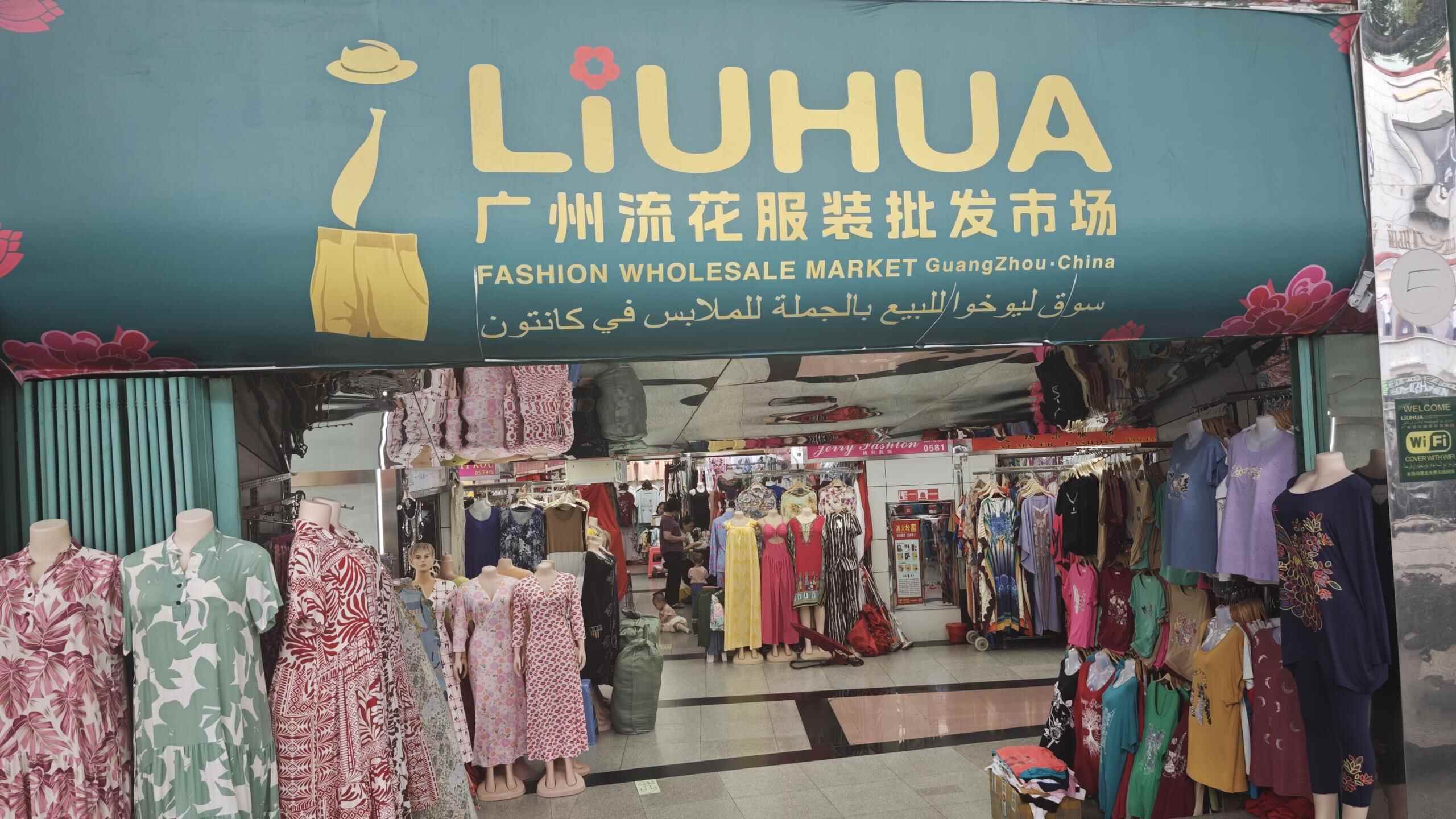
For apparel and fashion buyers, Guangzhou LIUHUA Fashion Wholesale Market can be used as a physical sourcing and wholesale destination. The supplied market material states that the market officially opened on October 16, 1996, is located at 194 West Huanshi Road, Yuexiu District, Guangzhou, and serves buyers from regions including South America.
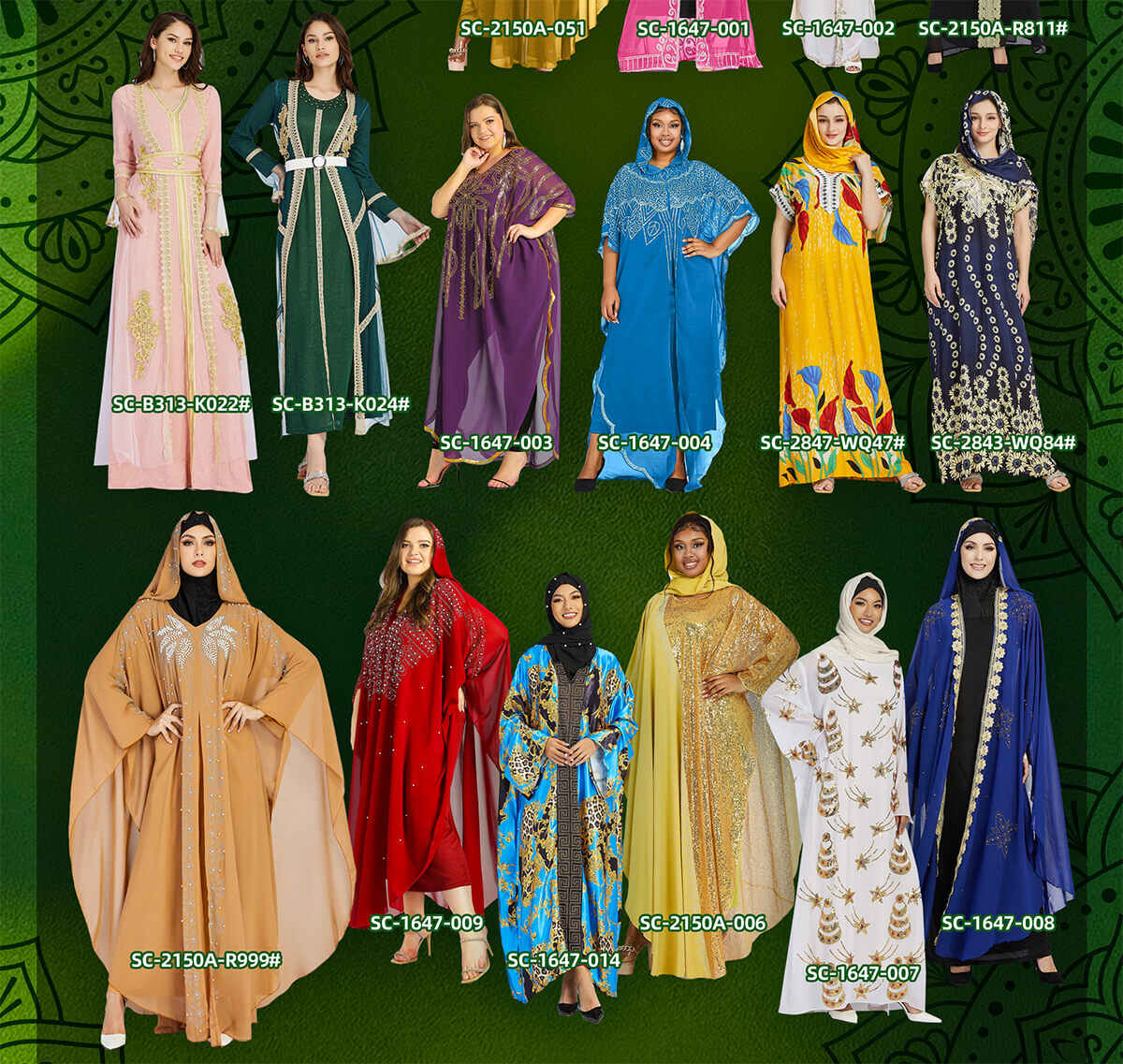
The supplied material states that more than 90% of suppliers have their own factories and provide design and production services, while more than 60% of shops have ready-made clothing available for wholesale. It lists men's wear, women's wear, kidswear, Muslim fashion, African clothing, wedding dresses, denim, suits, leather goods, and fashion accessories, with ready-stock, OEM, and ODM options.
| Step | Buyer Action at LIUHUA | Commercial Output |
|---|---|---|
| 1. Prepare sourcing brief | Bring target styles, price range, quantity, sizes, fabrics, colors, branding and packaging requirements. | Supplier-ready specification |
| 2. Compare shops | Visit multiple suppliers selling comparable products. | Shortlist |
| 3. Ask about factory capability | Confirm whether the supplier can produce the item and support repeat orders. | Production assessment |
| 4. Check ready stock | For urgent or market-testing orders, confirm available styles, sizes and quantities. | Ready-stock order option |
| 5. Request samples | Many suppliers accept sample orders; confirm sample cost and shipping terms. | Approved sample |
| 6. Negotiate wholesale terms | Discuss MOQ, unit price, customization, packaging, lead time, payment and inspection. | Quotation / purchase terms |
| 7. Confirm specifications | Write down the final product specification and approved sample reference. | Purchase order basis |
| 8. Arrange inspection | Agree on inspection timing, standard and handling of defects. | Quality-control plan |
| 9. Consolidate cargo | If buying from multiple shops, confirm whether cargo can be collected and consolidated. | Consolidated shipment |
| 10. Arrange international logistics | Select air, sea, express, or door-to-door service based on cargo and destination. | Shipping instruction |
| 11. Prepare customs documents | Ensure invoice, packing list, transport document, origin and product-compliance documents match the goods. | Customs-ready file |
The supplied LIUHUA Service Center information describes international logistics, door-to-door customs-clearance support, air, sea and express shipping, international payment and settlement, sourcing agency services, and foreigner support. It states that the logistics team can recommend shipping solutions for buyers in South America and other regions based on destination, cargo type, and delivery schedule.
For a Latin American buyer who cannot visit China, a sourcing or purchasing agent can help translate requirements, compare suppliers, coordinate samples, arrange inspection, consolidate goods, and communicate with logistics providers. The buyer should agree in advance on service scope, fees, supplier disclosure, inspection standards, payment handling, and responsibility for errors.
9. Planning the First Import Business
The first import should be designed as a controlled test. The objective is not necessarily to maximize the first order, but to validate product demand, supplier reliability, landed cost, customs procedures, and resale economics.
| First-Import Phase | Recommended Action | Go / No-Go Check |
|---|---|---|
| Market test | Choose a limited number of products and manageable quantity. | Can the expected selling price support landed cost? |
| Supplier validation | Check business identity, factory/wholesale capability, references or inspection options. | Can the supplier reproduce the specification? |
| Sample | Approve the exact sample/specification. | Does the sample meet commercial quality expectations? |
| Compliance | Confirm HS code, labeling, permits and product standards. | Can the product legally enter and be sold? |
| Landed-cost model | Include freight, duties, taxes, brokerage and destination costs. | Does the expected margin remain acceptable? |
| Payment risk | Use documented commercial terms and retain transaction records. | Are payment terms and responsibilities clear? |
| Inspection | Inspect before shipment when the order value/risk justifies it. | Are defects and quantity discrepancies controlled? |
| Shipping | Select the transport method and destination port/warehouse. | Are transit and destination charges understood? |
| Resale | Track actual sales, returns, defects and customer feedback. | Should the product be reordered? |
Do not scale an order simply because the first sample was good. The real test is whether the supplier can reproduce the approved quality at the agreed quantity, whether the shipment clears customs smoothly, and whether the product remains profitable after all landed costs.
10. Frequently Asked Questions
What is the best way to wholesale Chinese products for Latin America?
Start with a destination-country product and compliance check, then compare several Chinese suppliers using the same specification, approve samples, calculate landed cost, inspect the goods where appropriate, and arrange shipping and customs clearance through a qualified logistics or customs partner.
Is China-to-Latin America shipping the same for every country?
No. Ports, routes, transit times, customs procedures, taxes, importer requirements, labeling rules, and product regulations vary by country. A quote should always be based on a specific origin, destination, cargo type, and service scope.
What documents are commonly needed for importing from China into Latin America?
Common documents include a commercial invoice, packing list, transport document such as a bill of lading or airway bill, and origin documentation where applicable. Additional permits, certificates, or conformity documents may be required depending on the country and product.
How do I calculate the landed cost of Chinese goods?
Add product cost, China-side handling, inspection, export charges, international freight, insurance, import duties, applicable taxes, customs/brokerage, and destination charges. Then divide the relevant total by the number of sellable units.
Should I compare suppliers by unit price?
No. Compare suppliers using the same specification and evaluate MOQ, quality, lead time, packaging, payment terms, freight basis, inspection, and estimated landed cost.
Should I order samples before a wholesale order?
For a new supplier, sample approval is generally a useful risk-control step. The sample should be treated as the reference for the bulk production specification.
What is the difference between LCL and FCL?
LCL means less-than-container-load cargo is consolidated with other shipments. FCL uses a dedicated container. LCL can suit smaller commercial volumes, while FCL may become more economical or operationally attractive at larger volumes.
Can I combine products from several Chinese suppliers into one shipment?
Yes, where the logistics provider supports consolidation. A consolidation warehouse can collect cargo from multiple suppliers, check cartons, and prepare a combined shipment. Buyers should compare consolidation and destination charges before choosing the service.
Can Guangzhou LIUHUA Fashion Wholesale Market handle wholesale clothing orders?
The supplied LIUHUA material states that more than 60% of shops have ready-made clothing available for wholesale and that more than 90% of suppliers have their own factories and can provide design and production services. Individual MOQ, price, sample, production, and payment terms must be confirmed with each supplier.
Can LIUHUA Market support shipping to Latin America?
The supplied market material states that its international logistics service supports buyers worldwide, including South America, with air freight, sea freight, international express, and door-to-door shipping with customs-clearance support. The actual service, destination charges, customs responsibility, and delivery terms should be confirmed for the specific shipment.
Can a sourcing agent help with my first China import?
Yes. A sourcing agent can help with supplier screening, Chinese-language communication, negotiation, sample coordination, inspection, consolidation and logistics. The buyer should define the agent's responsibilities and fees before engagement.
What should I do before placing my first large order?
Confirm demand, approve samples, verify the supplier, calculate landed cost, check destination-country compliance, agree on payment and inspection terms, and prepare the customs documentation plan before production starts.
Key Takeaway
A profitable China-to-Latin America wholesale business is built around the complete landed-cost and compliance chain, not the factory price alone.
Choose the market → choose the product → compare suppliers → approve samples → verify compliance → calculate landed cost → place the order → inspect → consolidate → ship → clear customs → measure resale performance.
For fashion and apparel buyers, Guangzhou LIUHUA Fashion Wholesale Market can be a practical sourcing location for ready-stock, OEM and ODM products. Its supplied market information also describes international logistics and sourcing-support services for global buyers.
The most important discipline for a first-time importer is to separate three questions: Can I buy the product? Can I legally import and sell it in my destination market? Can I still make an acceptable margin after all landed costs? A successful sourcing plan needs a positive answer to all three.
Sources and Regulatory Reference Note
This article uses the supplied GZLIUHUA.COM market-planning document as the source for LIUHUA Market facts. The document states the market's opening date, address, buyer regions, supplier capabilities, product categories, sample ordering, and international logistics/service-center information.
For regulatory examples and current reference points, the article also consulted: Inter-American Development Bank, Trade Trends Estimates for Latin America and the Caribbean, 2026 Q1 Update; Mexico's Agencia Nacional de Aduanas de México (ANAM) import requirements and textile labeling standard NOM-004-SE-2021; Brazil Receita Federal import declaration guidance; Colombia DIAN guidance on commercial invoices and import support documents; and the U.S. International Trade Administration country guide for Peru.
Regulatory requirements change and are product- and country-specific. This article is an informational sourcing guide, not legal, tax, customs, or regulatory advice. Before commercial shipment, importers should confirm the latest requirements with the destination country's customs authority, relevant product regulator, and/or a qualified customs broker.