For global buyers sourcing from China, the question is not simply whether AliExpress is safe. A more useful question is whether the supplier, product, payment, logistics, and total sourcing cost can be properly controlled.
AliExpress can be a practical option for product testing, samples, small orders, and market research. However, when purchasing becomes regular wholesale business, especially with larger quantities, custom products, private labels, or repeat orders, buyers should look beyond the marketplace and consider China’s broader wholesale supply chain.
For international buyers, the best approach is often to use AliExpress as a starting point for testing and supplier discovery, rather than assuming it is the best channel for every stage of wholesale sourcing.
1. Is AliExpress Safe for Global Buyers?
For small-value and test purchases, AliExpress can be a relatively convenient and safe way to source products from China. Buyers can compare products, prices, seller reviews, and customer feedback before committing to larger purchases.
However, platform protection does not eliminate the risks associated with international trade.
For example, a buyer placing a small sample order mainly needs to determine whether the product meets expectations. A buyer importing thousands of units needs to consider much more:
· Whether product quality remains consistent;
· Whether the supplier can maintain supply;
· Whether wholesale pricing is competitive;
· Whether products can be customized;
· Whether shipping costs make the order commercially viable;
· Whether the products meet destination-market requirements.
This means that “safe” depends heavily on the type and scale of the purchase.
| Purchase Situation | AliExpress Suitability | Main Consideration |
|---|---|---|
| Product testing | High | Test quality and market demand |
| Buying samples | High | Compare products and suppliers |
| Small orders | High | Convenience and lower initial risk |
| Occasional wholesale | Medium | Compare total cost |
| Large-volume wholesale | Medium/Low | Supplier relationship and pricing |
| OEM/ODM | Usually less suitable | Direct supplier communication |
| Custom branding | Depends on seller | Production and packaging control |
| Long-term sourcing | Usually better to diversify | Stable supply and supplier management |
For this reason, global buyers should think of AliExpress as one sourcing channel, not as a guarantee that every transaction will be suitable for wholesale importing.
2. When Should You Use AliExpress, and When Should You Not?
AliExpress is particularly useful during the testing stage of a sourcing project.
A buyer entering a new product category can order samples from several sellers, compare quality, and test customer demand before investing in inventory.
AliExpress is a good fit when you want to:
· Test a new product;
· Buy samples;
· Make small purchases;
· Test overseas market demand;
· Compare Chinese suppliers;
· Find ready-stock products;
· Identify potential suppliers before a larger order.
For example, an overseas fashion retailer considering a new women's clothing category could purchase samples from several Chinese sellers before deciding which products are worth ordering in bulk.
This reduces the cost of making a wrong purchasing decision.
When should you look beyond AliExpress?
Once purchasing becomes a long-term wholesale operation, buyers may benefit from working directly with Chinese manufacturers, trading companies, or physical wholesale markets.
This is especially relevant when you need:
· Large-volume orders;
· Repeated monthly purchases;
· OEM/ODM;
· Custom logos;
· Custom packaging;
· Stable supply;
· Multiple suppliers;
· Lower wholesale pricing;
· Consolidated shipments.
A simple way to think about it is:
Small-scale testing → AliExpress can be convenient
Long-term wholesale sourcing → Direct China sourcing may be more suitable
This does not mean AliExpress cannot be used for wholesale. Rather, as order volume increases, supply-chain management becomes more important than marketplace convenience.
3. How to Know Whether a Seller Is Trustworthy
Global buyers do not necessarily need to conduct a complicated supplier audit for every small order. A few practical checks can provide useful signals.
Look at the Seller's Track Record
Do not evaluate a seller based only on product photos.
Consider:
· How long the store has been operating;
· Product reviews;
· Number of orders;
· Repeat customer feedback;
· Buyer-uploaded photos;
· How the seller responds to negative reviews.
Consistent feedback from different buyers is generally more useful than polished product images alone.
Look at Communication
A potentially reliable Chinese supplier should be able to answer basic wholesale questions clearly, such as:
· What is the MOQ?
· What is the wholesale price?
· Is the product in stock?
· Can it be customized?
· How long is production?
· Can samples be provided?
· What shipping options are available?
If a seller focuses almost entirely on offering the lowest price but cannot clearly explain basic purchasing conditions, buyers should be cautious.
Do Not Automatically Choose the Cheapest Supplier
The cheapest supplier is not necessarily the best supplier.
For wholesale buyers, a more useful evaluation is:
Price + quality + delivery reliability + communication + after-sales support
A supplier offering a 10% lower price may ultimately be more expensive if quality is inconsistent or deliveries are frequently delayed.
4. How to Make Wholesale Purchasing Safer
Wholesale sourcing from China does not have to involve an overly complicated process. Several basic measures can significantly reduce risk.
Buy Samples Before Placing Large Orders
Do not place a large order simply because the product looks attractive online.
Test the sample for:
· Quality;
· Materials;
· Size;
· Color;
· Workmanship;
· Packaging;
· Actual appearance.
The purpose of sampling is not only to test the product. It also gives the buyer an opportunity to evaluate the supplier.
Define Product Requirements Clearly
For clothing, shoes, bags, and similar products, buyers should clarify important requirements before production.
| Product Requirement | Examples |
|---|---|
| Material | Fabric, leather, synthetic material, etc. |
| Size | Measurements and size range |
| Color | Standard color or approved sample |
| Quantity | Total units and size ratios |
| Packaging | Individual packaging, cartons, labels |
| Branding | Logo, tags, private label |
| Quality | Acceptable defects and tolerances |
The biggest problem in wholesale sourcing is not always a high price. It can be a misunderstanding between buyer and supplier about what is actually being purchased.
Calculate the Total Landed Cost
Do not compare suppliers based only on unit price.
A more realistic calculation includes:
Product price + China domestic transport + international freight + duties/taxes + customs clearance + destination costs
A product that appears cheaper at the supplier level may not be cheaper after transportation and import costs are included.
Consider Pre-Shipment Inspection for Larger Orders
For a significant wholesale order, a basic pre-shipment inspection can help verify:
· Quantity;
· Product consistency;
· Obvious quality problems;
· Packaging;
· Whether the finished goods match the approved sample.
The objective does not need to be complicated. The key question is:
Does the shipment match what was agreed?
5. Major Risks of Wholesale Purchasing From China
International buyers sourcing from China should pay attention to four major categories of risk.
Quality Risk
One of the most common problems is not receiving a completely different product, but receiving a mass-produced product that is noticeably different from the sample.
Examples include:
· Thinner material;
· Different colors;
· Cheaper accessories;
· Lower workmanship;
· Different packaging.
This is why samples, clear specifications, and inspection are important.
Supply Risk
A product may become successful, but the supplier may later:
· Run out of stock;
· Delay production;
· Increase prices;
· Lose production capacity;
· Stop supplying the product.
For important products, building a stable supplier relationship is usually safer than relying on a temporary seller.
Logistics Risk
International orders are also affected by:
· Shipping schedules;
· Port congestion;
· Customs clearance;
· Import duties;
· Destination charges;
· Freight costs.
Therefore, buyers should evaluate landed cost and delivery time, rather than focusing only on the supplier's unit price.
Compliance and Intellectual Property Risk
Some products are subject to specific import or safety requirements in the destination country.
This is particularly important for:
· Electronics;
· Children's products;
· Cosmetics;
· Food-related products;
· Medical products.
Buyers should also be careful with branded products, logos, copyrighted designs, and other intellectual property.
The fact that a Chinese seller can supply a product does not automatically mean that the buyer has the right to sell it in every market.
6. Guangzhou Liuhua Fashion Wholesale Market as an Alternative
For apparel buyers, AliExpress is not the only way to source from China.
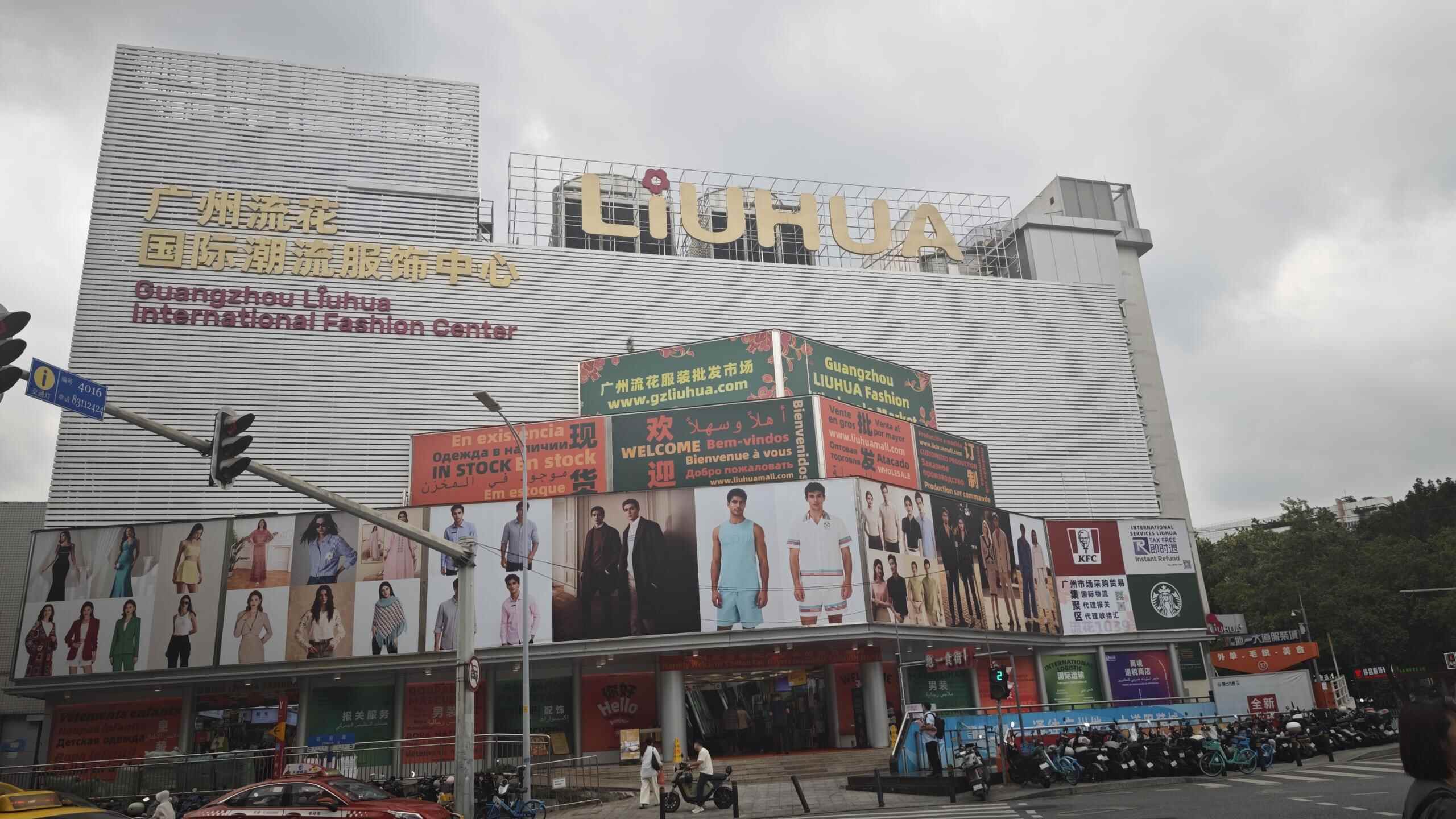
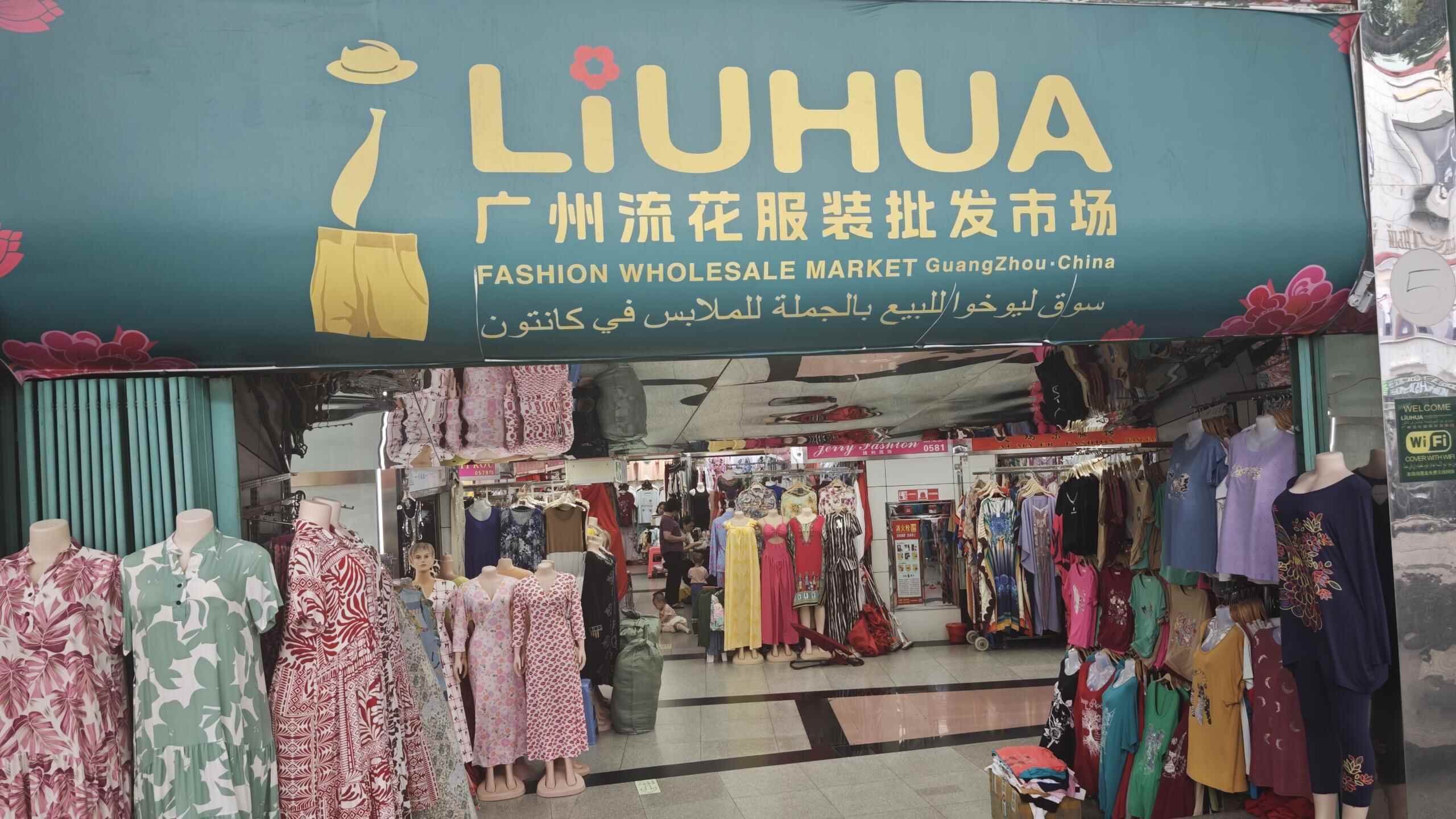
Guangzhou Liuhua Fashion Wholesale Market is an example of a physical wholesale sourcing environment in China.
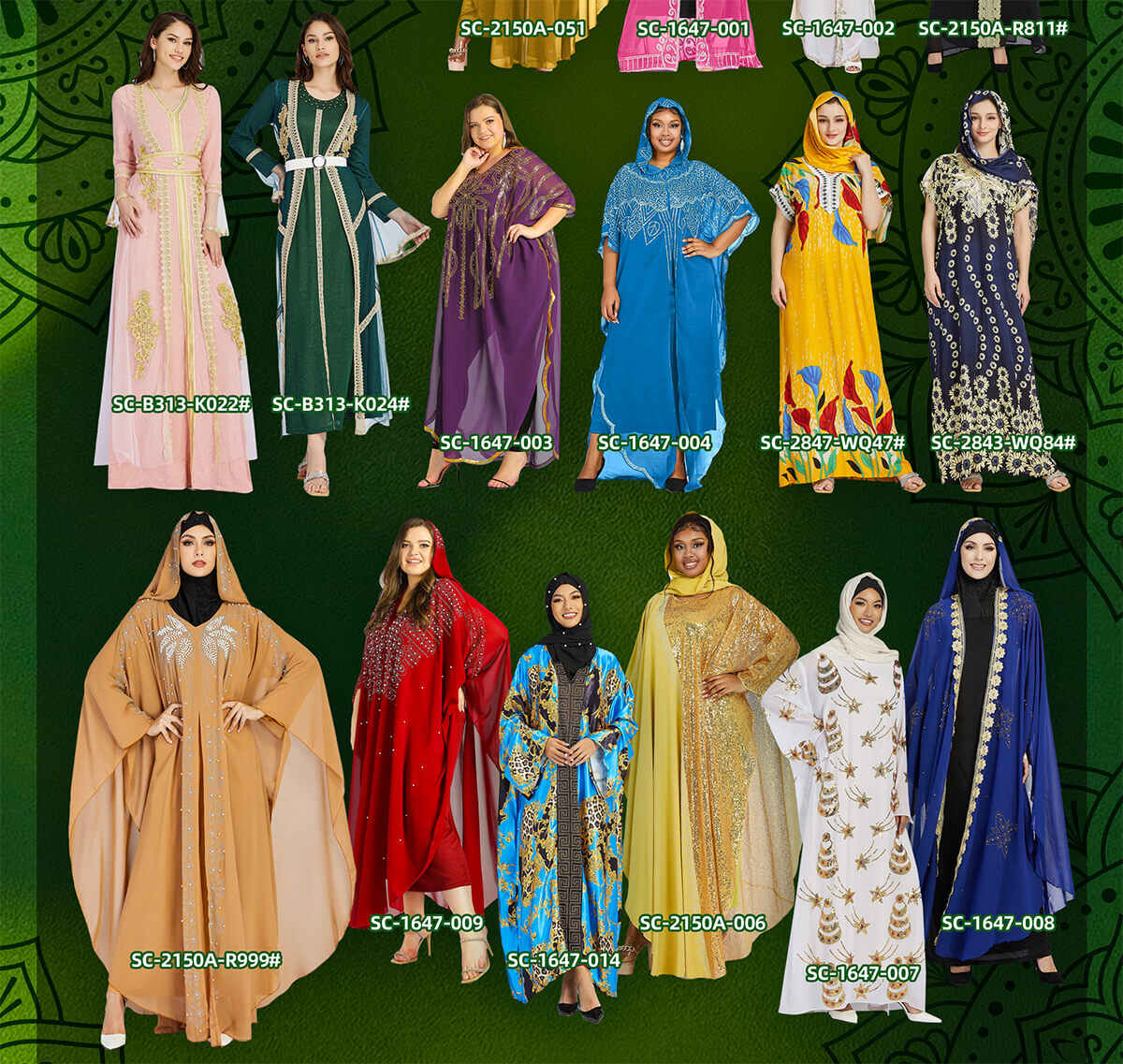
Located near Guangzhou Railway Station in Yuexiu District, the market's official information describes an ecosystem of more than 2,000 apparel suppliers and manufacturers, covering women's wear, men's wear, children's wear, Muslim fashion, ready-stock wholesale, and OEM/ODM sourcing.
For international apparel buyers, one of the main advantages of physical sourcing is the ability to compare products and suppliers directly.
Buyers can:
· Inspect fabrics;
· Check workmanship;
· Compare styles;
· Compare wholesale prices;
· Discuss MOQs;
· Check ready-stock availability;
· Discuss OEM/ODM;
· Build long-term supplier relationships.
This is different from selecting products mainly through online images, descriptions, and reviews.
For buyers who have already identified stable demand and want to build a long-term apparel supply chain, a physical wholesale market can provide a path from:
“Finding products” → “Building a supplier network”
The market also provides services for international buyers, including logistics, payment, and trade-related services.
For apparel businesses, a practical sourcing path could therefore be:
AliExpress product testing → Market validation → Chinese supplier sourcing → Guangzhou wholesale market / direct supplier relationship → Long-term wholesale purchasing
This approach allows AliExpress to serve as a testing channel, while direct sourcing becomes more important as the business grows.
7. Frequently Asked Questions
Is AliExpress good for wholesale?
It can be suitable for small-batch purchasing, product testing, and discovering suppliers.
For larger or recurring orders, buyers should also compare direct Chinese manufacturers, trading companies, and physical wholesale markets.
Is AliExpress safe for buying products from China?
It can be a practical option, particularly for smaller purchases. However, buyers should evaluate the specific seller and product rather than assuming that the platform guarantees product quality.
Is buying directly from Chinese suppliers cheaper than AliExpress?
It can be, particularly for larger orders, but there is no universal rule.
Buyers should compare:
Product price + quality + MOQ + shipping + delivery time + after-sales support
rather than comparing unit prices alone.
Should small buyers use AliExpress or contact Chinese suppliers directly?
For testing products, AliExpress is often more convenient.
Once a product has demonstrated stable demand and the buyer starts placing repeat orders, developing a direct relationship with Chinese suppliers may become more valuable.
Is Guangzhou Liuhua Fashion Wholesale Market suitable for international buyers?
For apparel wholesalers, it is a sourcing option worth considering. The market brings together a large number of clothing suppliers and offers ready-stock and OEM/ODM sourcing options, along with services for international buyers.
What is the most important thing when buying wholesale from China in 2027?
It is not simply finding the cheapest supplier.
The more important goal is to find a supplier that offers:
Reasonable pricing + consistent quality + reliable supply + long-term cooperation
Conclusion: Is AliExpress Safe for Global Buyers in 2027?
For global buyers, AliExpress is not necessarily unsafe—but it is not the complete answer to China wholesale sourcing either.
If you are:
· Testing products;
· Buying samples;
· Making small purchases;
AliExpress can be a convenient starting point.
But if your business has moved toward:
· Large-volume purchasing;
· Repeat orders;
· OEM/ODM;
· Private labeling;
· Long-term sourcing;
then the focus should gradually shift from the marketplace to the Chinese supply chain itself.
For apparel buyers, wholesale markets such as Guangzhou Liuhua Fashion Wholesale Market offer another route into China's clothing supply chain, allowing buyers to compare products and suppliers directly and develop longer-term sourcing relationships.
Ultimately, the most important question is not:
“Which platform should I use?”
It is:
“Do I know who I am buying from, what I am buying, and what my total landed cost and risk are?”
For global wholesale buyers, that is the foundation of safer sourcing from China in 2027.